


admin_fedwenke
- May 21, 2026

When we talk about period poverty, we often picture a young girl missing school because she cannot afford a packet of sanitary pads. We talk about the rising costs of menstrual products, the lack of clean water, and the urgent need for a period-friendly world.
But there is a deeper, quieter layer to this crisis that remains cloaked in shadows. What happens when a girl cannot hear the conversations about her own body? What happens when the school bathroom lacks the physical accessibility she needs to change her pad?
For deaf girls and girls with disabilities, the global crisis of period poverty isn’t just about a lack of financial resources, it is compounded by a profound isolation caused by communication barriers and societal neglect.
The Hidden Barrier: Stigma and Communication
In many communities, menstruation is still treated as a taboo, a shameful secret to be hidden away. For a hearing child, information about periods is often picked up through overheard conversations, radio programs, or casual whispers among friends.
A deaf girl is entirely cut off from this informal network of information. If her parents do not know sign language, or if her teachers skip over reproductive health education due to embarrassment, she is left completely in the dark.
Imagine experiencing your first period without ever having heard or signed the word “menstruation.” Imagine the terror of bleeding, thinking you are dying, simply because no one broke the silence to explain that your body is embarking on a beautiful, natural journey. This lack of menstrual health education strips young girls of their confidence before they even understand what is happening to them.
Managing Periods with Dignity
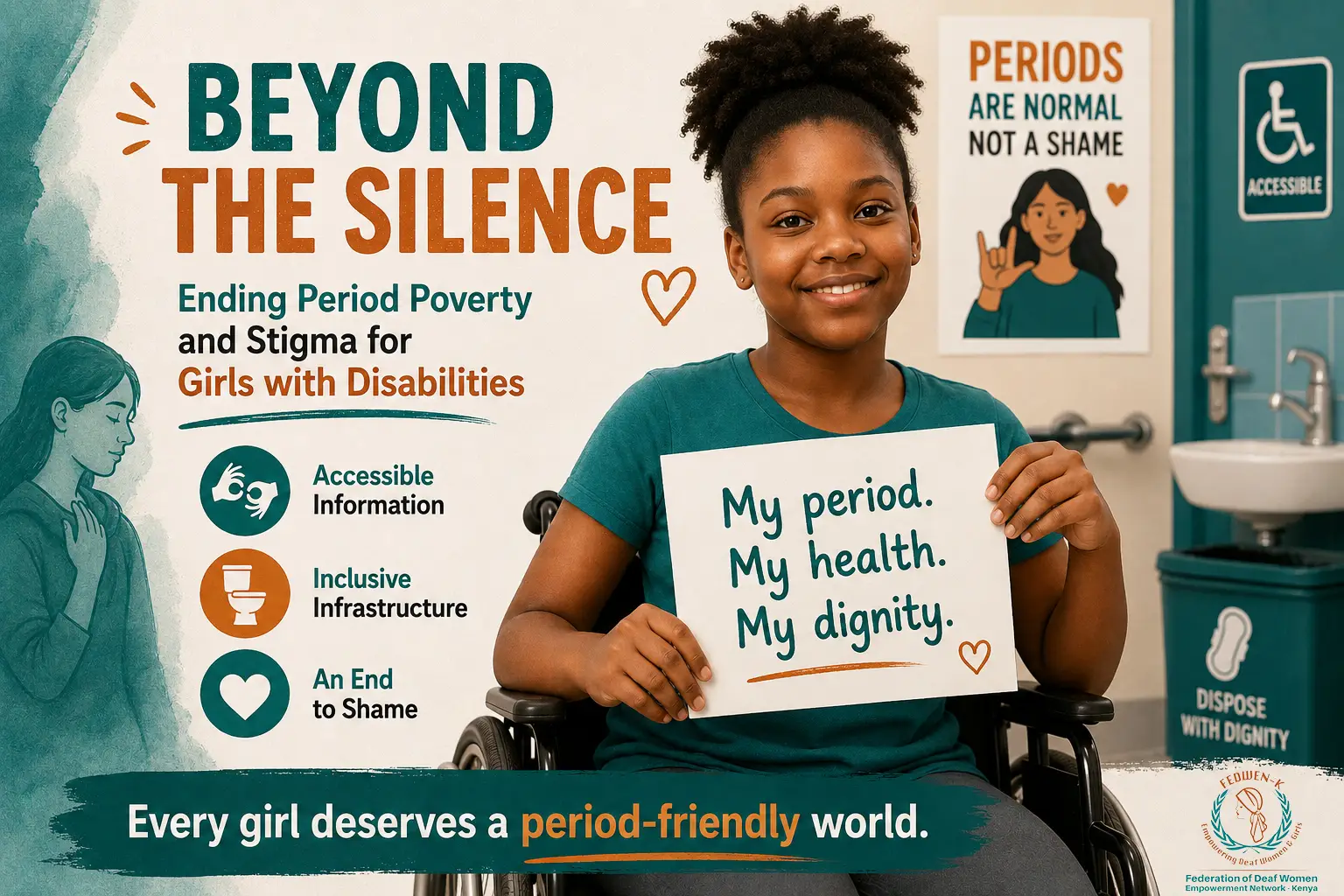
True menstrual hygiene management requires more than just hand-outs. To ensure that every girl can manage her period with dignity and without shame, we must dismantle the double stigma of menstruation and disability.
-Accessible Information: We must create menstrual health resources in accessible formats including sign language videos, visual charts, and braille materials—so that deaf adolescents have the vocabulary to express their needs.
-Inclusive Infrastructure: School bathrooms must be designed with girls with physical and sensory disabilities in Max mind—providing privacy, accessible disposal bins, and clean water.
-An End to Shame: Communities must be educated to view menstruation not as an affliction or a vulnerability, but as a normal biological process.
No girl should have to choose between her education and her dignity. This Menstrual Health Awareness Month, let us pledge to break the silence completely. When we advocate for an end to period poverty, we must ensure that our voices, our signs, and our resources reach the girls who have been forced to suffer in silence the longest. Every girl deserves a period-friendly world.
