


admin_fedwenke
- June 22, 2026
When we discuss human rights, sustainable development, and education in Kenya, disability inclusion is frequently used as a corporate buzzword or a compliance checkbox. But true inclusion cannot merely exist on paper or within policy frameworks; it must be actively lived, felt, and demonstrated on the ground.
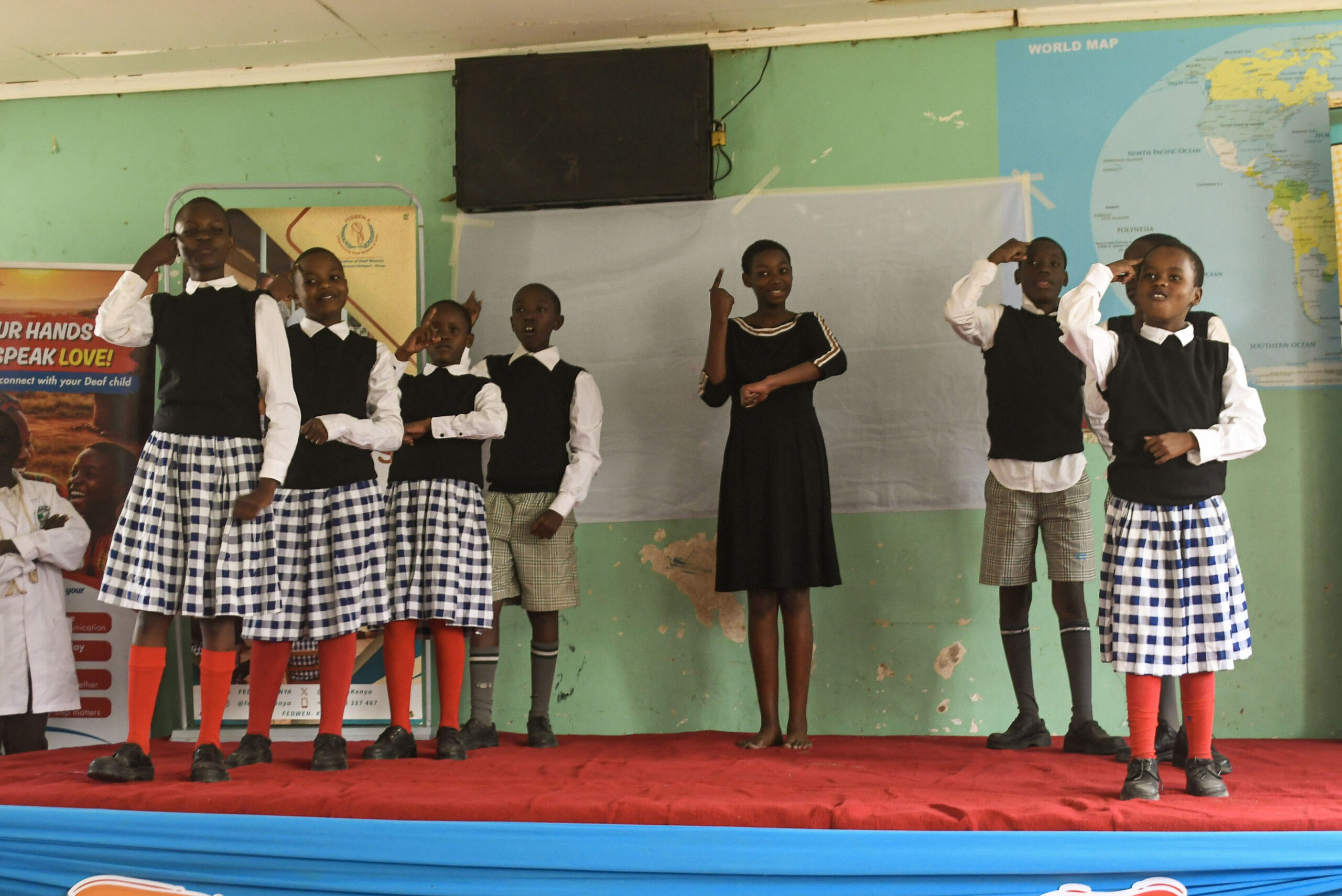
Last week, we hosted our annual IKID Clubs Day, commemorating the Day of the African Child. For FEDWEN, this event is far more than a celebration. It is a vital platform to address the intersecting challenges facing Deaf children, and other children with disabilities across Kenya who navigate a society that is rarely designed with their communication, culture, or full potential in mind.


True deaf advocacy and child rights protection mean acknowledging a fundamental truth: inclusion is not a passive act of inviting children to sit quietly in a room. It is the deliberate, empowering process of handing over the microphone and letting them lead.
Redefining Capability Through Deaf Culture and Creative Expression
Too often, public narratives surrounding children with disabilities focus entirely on vulnerability, systemic barriers, and limitations. Our IKID Clubs Day completely shattered that outdated script.
The absolute highlights of the celebration belonged entirely to the children. Through a vibrant showcase of presentations, including moving poetry, creative skits, traditional dances, and expressive storytelling, they took center stage. They did not just participate; they commanded the room, using their unique voices, talents, and linguistic identity to claim their space. These presentations provided clear evidence of agency, confidence, and leadership. When a child realizes that their identity and language are being celebrated by policymakers, educators, and peers alike, it transforms how they view their place in society. They shift from being the subjects of advocacy to becoming the active authors of social change.
The Power of an Inclusive Education Ecosystem
Building a truly accessible Kenya requires breaking down systemic barriers. The deep impact of this year’s commemoration was made possible by a powerful ecosystem of collaborative partnerships across multiple sectors:
- The Educational Foundation: The administration, dedicated teachers, and vibrant students from all the participating schools who invested their time and creativity into preparing for this day.
- Our Partners: The various partners whose resources, solidarity, and shared vision sustain FEDWEN’s mission.
- Government and Policy Leaders: The government officials who joined us in solidarity, proving that grassroots community action must be matched by structural commitment and inclusive governance.
- The Community Bedrock: The parents, guardians, and local community members whose daily encouragement forms the ultimate foundation of these children’s confidence.


Beyond the Commemoration: A Daily Commitment to Accessibility
The Day of the African Child serves as an essential annual reminder, but championing inclusive education and disability rights cannot be restricted to a single date on a calendar. As we reflect on the incredible talent, laughter, and powerful messages shared by the children, the ongoing challenge for advocates, leaders, and policymakers is consistency. How do we ensure that the accessibility, safety, and empowerment we experienced last week are permanently embedded into our everyday structures?
The brilliance is already there. The talent is undeniable. Our collective responsibility is to continue tearing down communication barriers and building platforms wide enough to hold the immense potential of every child.
FEDWEN extends its deepest gratitude to every partner, government representative, school, teacher, and parent who stood with us to make IKID Clubs Day an overwhelming success. The future belongs to our children.
How is your organization championing disability inclusion this year? Join the conversation in the comments below or reach out to partner with FEDWEN.
