


admin_fedwenke
- May 21, 2026

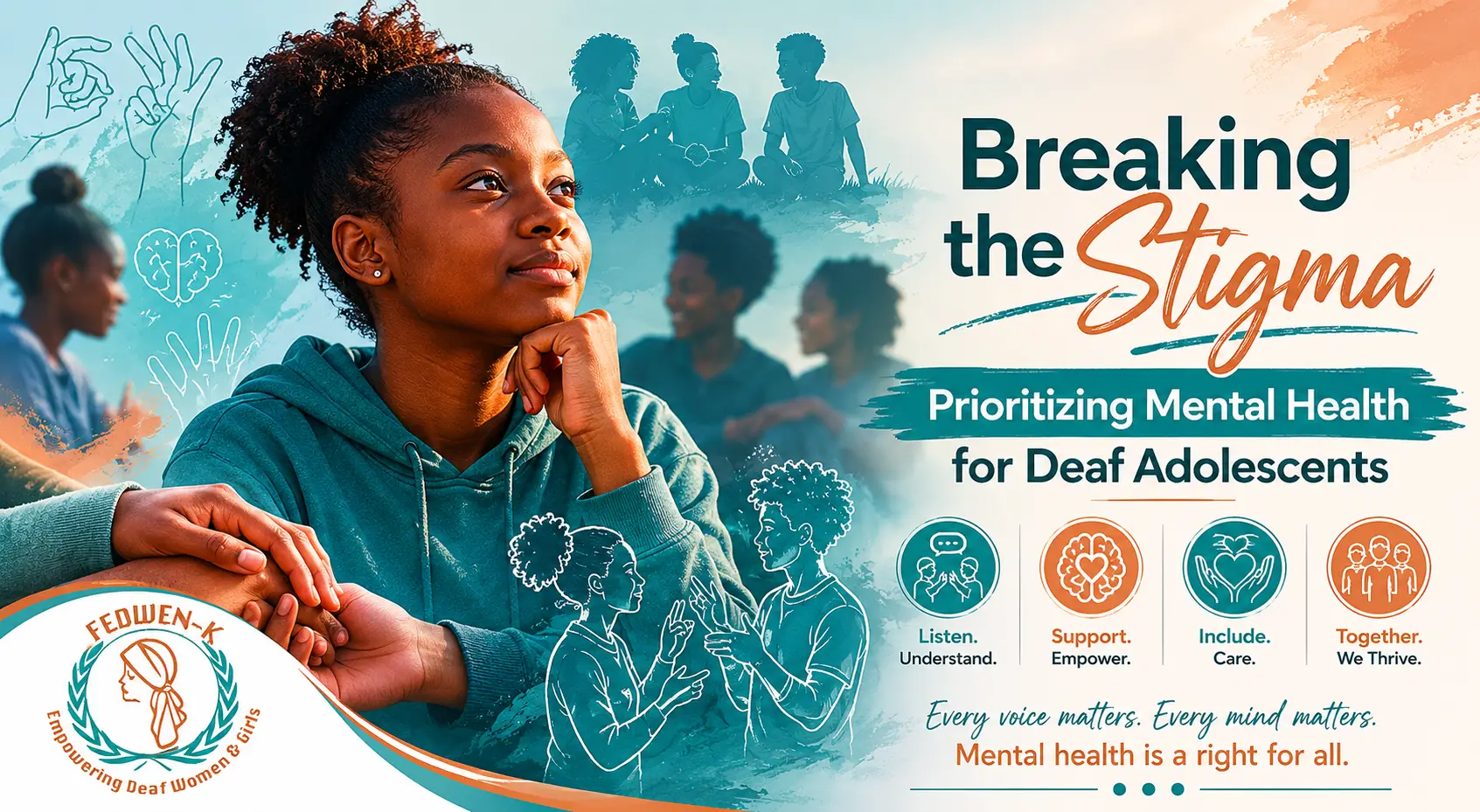
Growing up is a turbulent journey. For teenagers and young adults, navigating identity, relationships, and the future is an emotional rollercoaster. This May, as the world observes Mental Health Awareness Month, the global conversation is rightfully focusing on a pressing issue: the youth mental health crisis. Yet, as we advocate for promoting emotional well-being, reducing anxiety, and preventing depression, we must ask ourselves: Are our mental health systems speaking the right language?
For deaf adolescents and young people, the struggle to maintain good mental health is rarely just about internal emotions. It is intricately tied to a world that routinely forgets to include them, creating an environment of chronic isolation that takes a heavy toll on their minds.
The Silent Weight of Isolation
Human beings thrive on connection. We need to be understood, to express our frustrations, and to feel a sense of belonging. For a deaf youth living in a predominantly hearing family or community where no one fluent in sign language resides, everyday life can feel like being an outsider in your own home.
This constant communication barrier creates a unique psychological strain known as “language deprivation,” which can significantly increase the risk of severe anxiety and depression. When a young person cannot easily share their day, express their fears, or laugh at a joke at the dinner table, the loneliness settles deep into their bones.
Compounding this is a severe lack of accessible mental health services. If a deaf teenager decides to take action and seek professional support, they face a devastating reality: there are almost no mental health professionals who are fluent in sign language or trained in deaf culture. Relying on an interpreter to share your deepest, most vulnerable traumas completely changes the therapeutic dynamic, often driving young people away from getting help entirely.
Promoting Well-Being Through Action
Mental health is just as important as physical health, and breaking the stigma means building a society where asking for help is viewed as a sign of strength, not weakness. To support our deaf youth and young people with disabilities, we must shift from mere awareness to targeted action:
- Fostering Deaf Identity and Spaces: Connecting deaf adolescents with peer networks and deaf mentors provides an instant sense of community and validation, which is an incredible buffer against depression.
- Training Accessible Professionals: We need to advocate for and invest in training mental health counselors who can communicate directly in sign language, ensuring that deaf youth have safe, confidential spaces to heal.
- Normalizing the Conversation: Families and schools must normalize talking about mental well-being, teaching young people that “it’s okay not to be okay,” and giving them the tools to identify and express their emotional needs.
Every young person deserves to feel seen, heard, and valued. This month, let’s pledge to break down the barriers of stigma and communication. True mental health equity means ensuring that our support systems are completely accessible, allowing every adolescent to thrive with a healthy mind and a hopeful heart.
