


admin_fedwenke
- June 19, 2026
Including Deaf Children and Children with Disabilities in the Fight for Children’s Rights
Every year on June 16, Africa celebrates the Day of the African Child, a powerful reminder that every child has the right to protection, dignity, education, health, and equal opportunities. This day calls on governments, organizations, communities, and families to reflect on the progress made and the urgent actions needed to protect the rights of children across the continent.
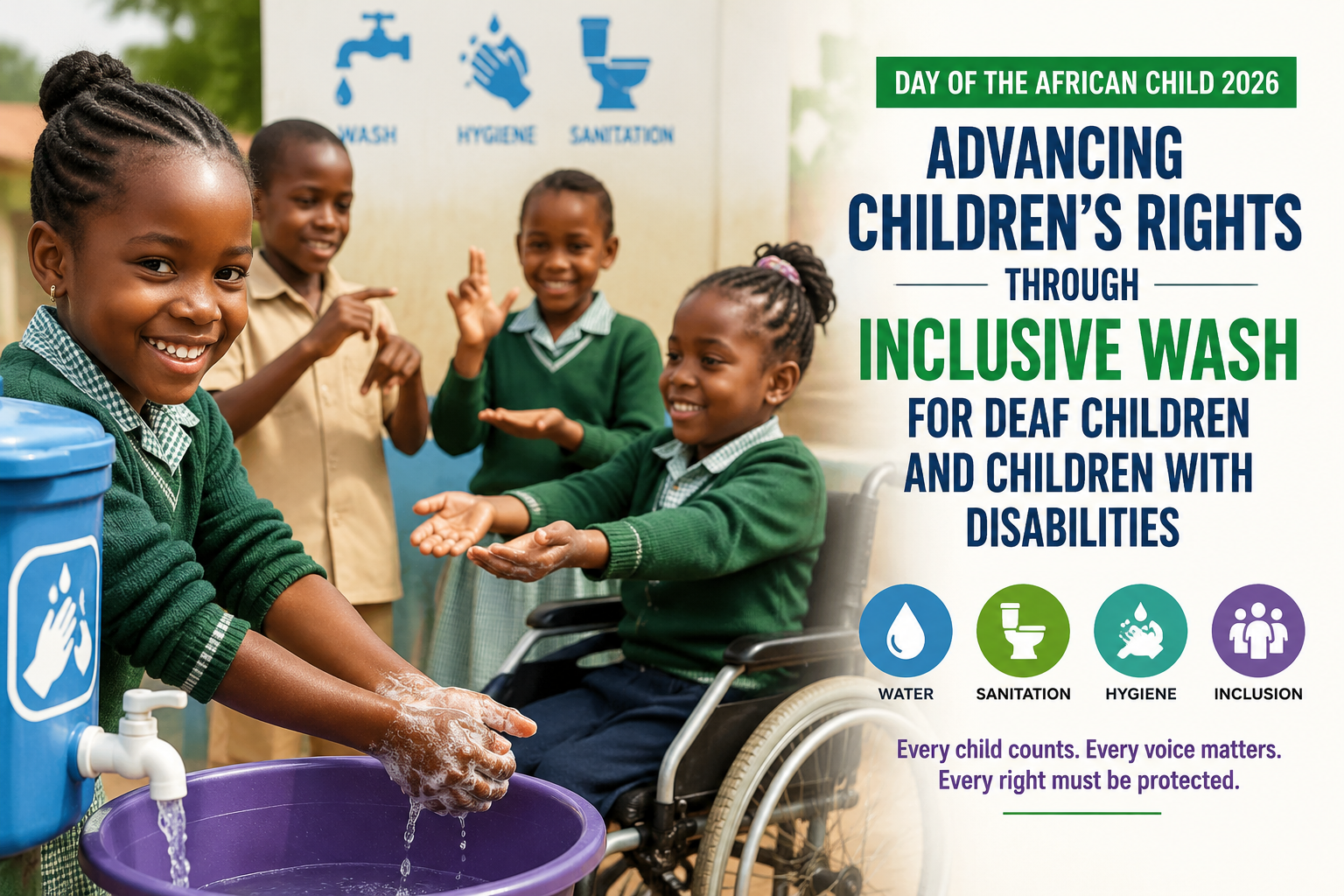
The 2026 theme, “Advancing Children’s Rights through Access to Safe Water, Sanitation and Hygiene (WASH),” highlights a fundamental truth: access to clean water, safe sanitation, and proper hygiene is not a privilege, it is a basic human right for every child. However, for millions of children across Africa, especially children with disabilities, access to inclusive and accessible WASH services remains a major challenge.
WASH Is a Children’s Rights Issue
Water, sanitation, and hygiene (WASH) are essential for children’s health, safety, dignity, and development. Access to clean drinking water, safe toilets, and hygiene information helps children stay healthy, attend school, and participate fully in their communities.

When children lack access to safe sanitation facilities, they face increased risks of illness, exclusion, and missed opportunities. For girls, especially during menstruation, the absence of private and accessible sanitation facilities can affect their confidence, dignity, and ability to remain in school. But beyond building facilities, we must ask an important question: Are our WASH services accessible and inclusive for every child?
Deaf Children and Children with Disabilities Must Not Be Left Behind
Children with disabilities have the same rights as every other child. Yet many continue to experience barriers that prevent them from accessing essential services, including water, sanitation, and hygiene facilities. For Deaf children, exclusion often goes beyond physical access. Many WASH messages are shared through spoken communication, posters with complex language, or community announcements that may not be accessible to children who are Deaf or hard of hearing. A Deaf child has the right to receive information about handwashing, menstrual hygiene, safe drinking water, and sanitation in a language they understand, including sign language.
An inclusive WASH approach means:
- Providing accessible hygiene education through Kenyan Sign Language and other communication methods.
- Ensuring schools have disability-friendly and safe sanitation facilities.
- Involving children with disabilities in decisions that affect their lives.
- Training teachers, health workers, and communities on disability inclusion.
- Recognizing Deaf children as active participants and leaders in promoting health and hygiene.
Children are not only beneficiaries of development, they are rights holders and powerful voices in their communities. Deaf children and children with disabilities must be given opportunities to express their views, share their experiences, and contribute to solutions. Their voices matter when designing schools, health services, and community programs. A truly child-friendly Africa is one where every child can learn, play, communicate, and grow without discrimination.
Building an Inclusive Future for Every Child
As we mark the Day of the African Child, we must strengthen our commitment to creating communities where no child is left behind. Safe water, sanitation, and hygiene must reach every child—including Deaf children and children with disabilities. The future of Africa depends on how well we protect, listen to, and invest in our children today.
Let us build an Africa where every child has access to clean water, safe sanitation, quality information, and the opportunity to thrive.
Every child counts. Every voice matters. Every right must be protected.
